
Customize the Requests View
The list view is where you can see the full list of your Requests along with the request details at a glance.
Each user can arrange the layout of the screen according to their own preferences and liking.
Watch the Video
Audio: Sound Length: 2:43 minutes
Watch the video in ...
Disclaimer: This video is translated from English using an AI tool; you may notice that the length of the speech may be slightly out-of-sync with the user interface recording.
Learn more
The columns are:
- Request ID
- Subject
- Requested By
- Submitted
- Age
- Priority
- Status
- Entity
- Notices
The list view is where you can find your requests and adjust your view to suit your needs.
Search
In the Search field, enter the search term and the search results will automatically populate.

Advanced Search
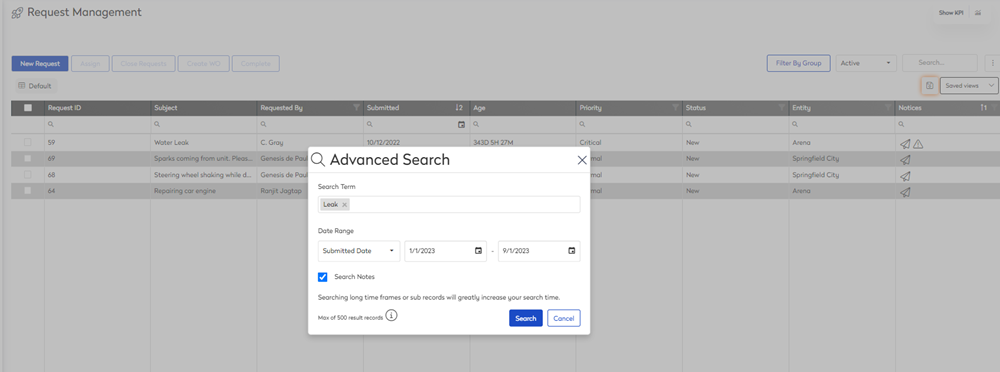
Advanced Search allows you to search for terms within any request including the notes within a request. Advanced search also allows you to search within a specified time period of when the request was submitted or closed. The example below shows the advanced search query for requests including the term leak, submitted between January 1st and September 1st, 2023.
- Click the more actions
 icon.
icon. - Select Advanced Search. The advanced search window displays.
- In the Search field, enter the search term.
- In the date range, select either:
- Submitted Date
- Closed Date
- Click the calendar
 icon and select a start date.
 - Click the calendar icon and select an end date.
You can include the notes field in your search. Click Search Notes checkbox.
- Click the Search button and the search results populate.
Column Search
When you search for requests, it will display only those request for the search criteria. Each column contains the search, and this will let you focus on the items you want.

Column Sort
- Click the column heading to sort ascending or descending.

Column Filter
When you click the Filter  icon, a menu will appear showing you the items you can select.
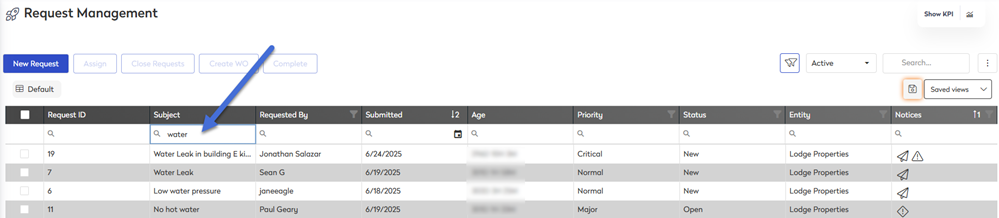
Filter by Group
Filter by group helps you view requests by group organization. These filter groups can be:
- single address
- floor plan
- group of assets
These groups have been set up by your Admin, see set up a site's location for more information.
- Click the Filter by Group button. The filter by group panel displays.
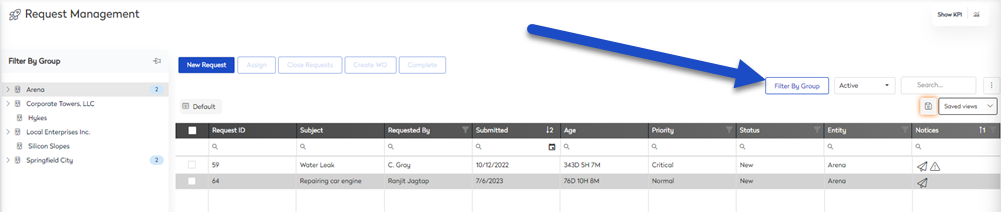
- Select a group to filter by. The request list is filtered.
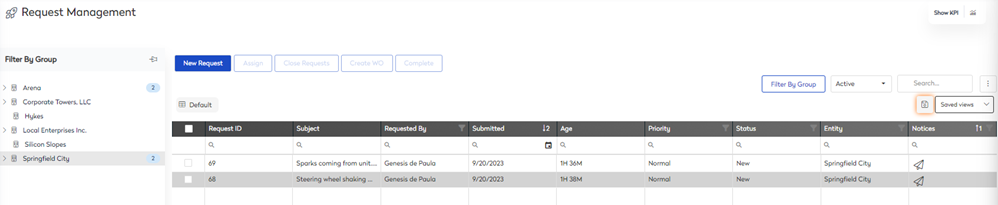
Saved View - Filter a Column Example
When viewing the request list, you may want to change the request columns and sort order. The Save View let's you set up the requests listing and then save it for next time.
This is best explained using an example. I want to create a saved list view for Springfield City and add the Asset column to the list view.
Step 1. Reorder Columns
- Drag and drop the Entity column to the front of the list.
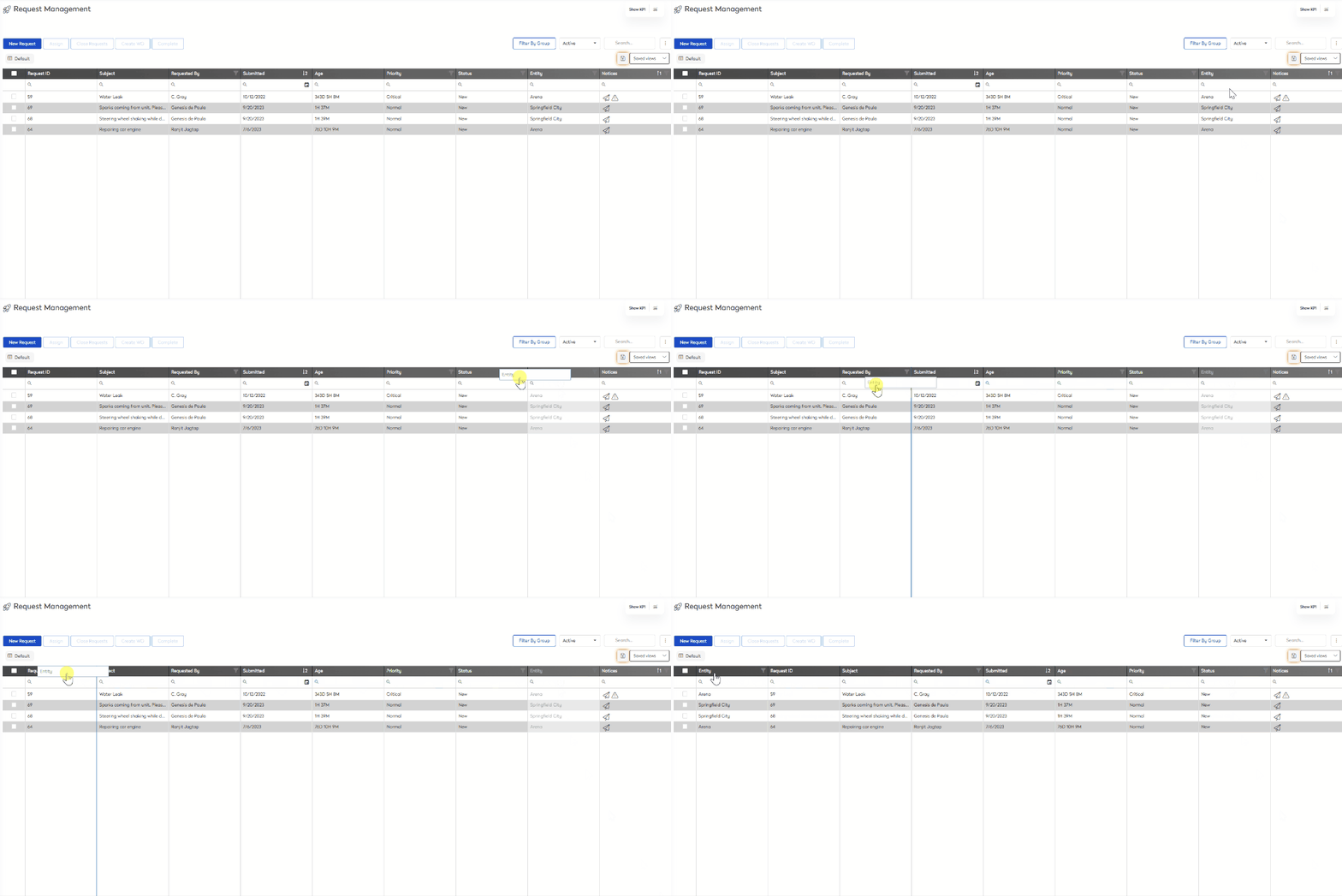
Step 2. Filter the Column
- Click on the filter
 icon within the Manufacturer column. The list of entities display.
 - Select Springfield City.
- Click the OK button. The Manufacturer column is filtered to display FORD.
Step 3. Add a column from the Column Chooser
- Click the more actions icon.
- Select Column Chooser. The column chooser displays.
- Drag and drop the Year column to the Request column headings. The year column displays on the request list.
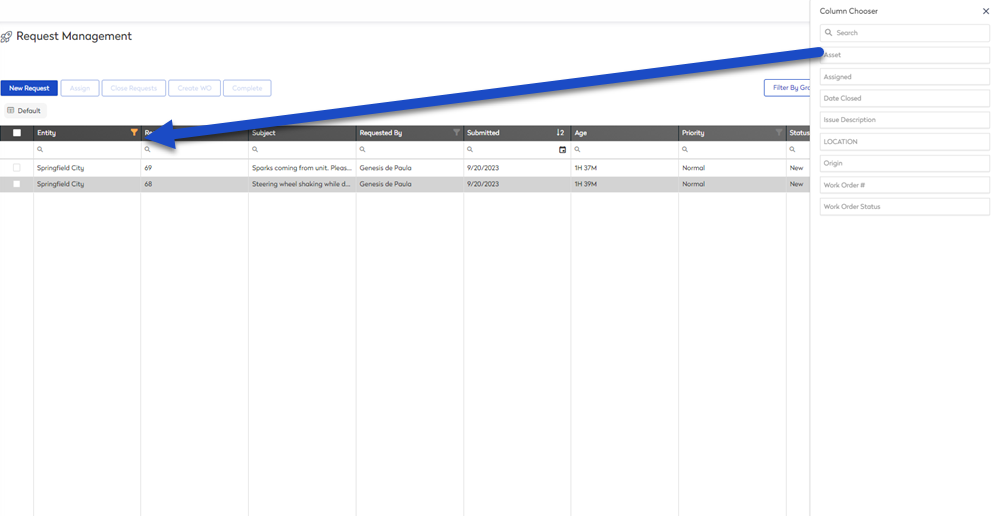
Step 4. Save your View
- Click the save
 icon. The create new view dialog displays.
 - In the View Name field, enter the name of the saved view.
- Select a who can access this view option, either:
- Private- Don't share this view with anyone.
- Everyone - Share this view with everyone.
- Security Roles - Share this view with specific roles in your organization.
- Teams - Share this view with specific teams in your organization.
- Click the Save View button.
Display your Saved View
The next time you want to use the saved view you can display it.
- Click the Saved views drop-down. The saved views pop-up displays.
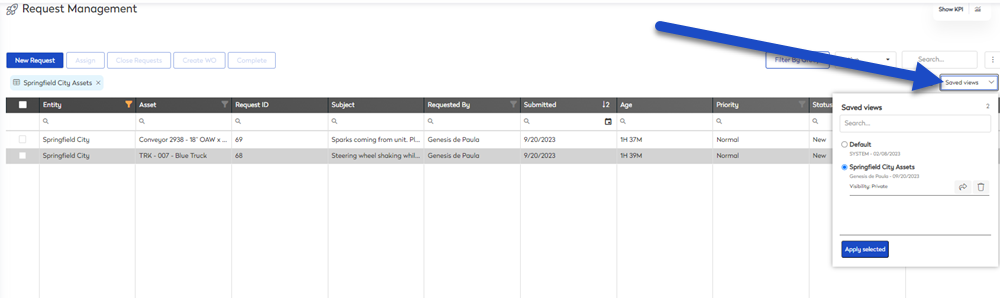
From this you can see a list of saved views, and the default view.
- Select a saved view.
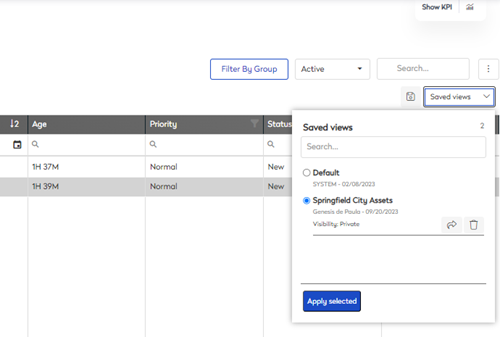
Remember, you can share a view that is private to you. Click the share  icon
icon
- Click the apply selected. The saved view displays.