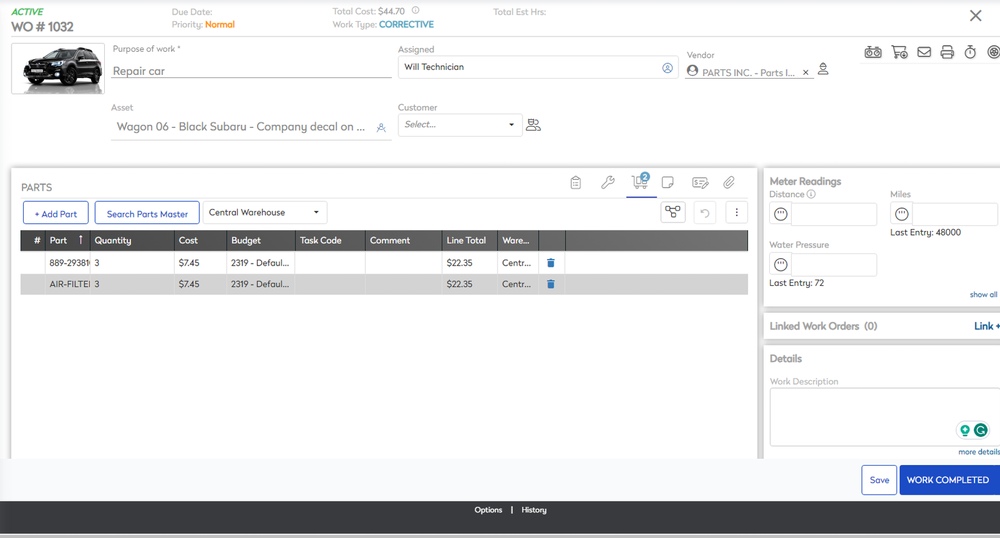
Import your Work Orders
Level: Administrator
The Work Order Import is used to populate multiple work orders and include details such as assets, inventory, labor, and costs. Note that you can only import 1,000 rows at a time.
Step 1. Download our sample file
- Navigate to Settings.
- From Tools and Support, click on the Import
 icon. The Import Tool dialog displays.
 - Click Work Orders. The Work Order Import Screen displays.
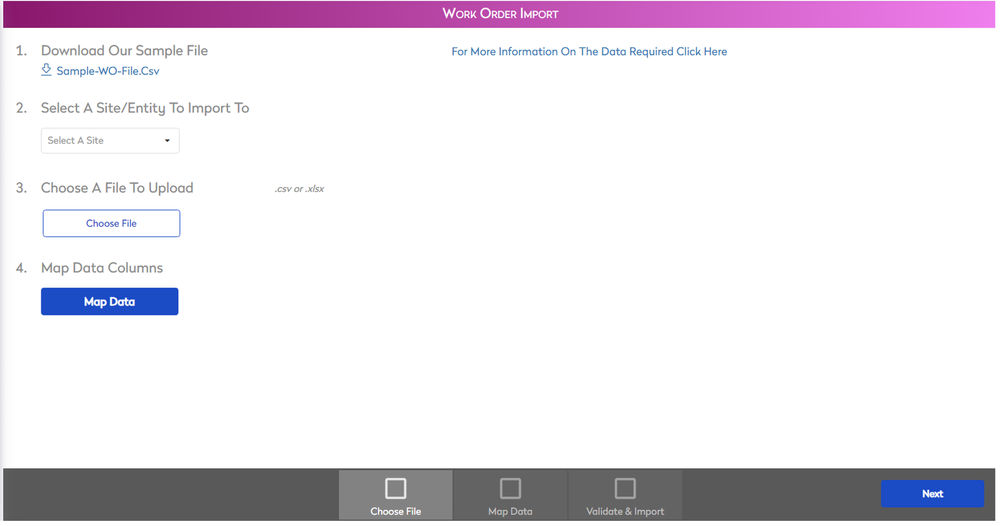
- Click on Sample-WO-File.Csv to download the sample import template.
Step 2. Complete the sample file section
- Open the Sample-WO-File.csv file in Microsoft Excel.
- Remember the data in this file is a sample, you must delete this row as you do not want to import these in.

- Under each of the Column Headers, complete the row data. For details on the data, see Work Order Import Template Data.
- After all the data has been entered on the sheet, save the file to your computer.
Below displays an example of a work order import.

Step 3. Upload the completed sample file
- Click the Choose File button.
- Navigate to the file and select it. The file name displays in the screen.
- Click the Map Data button. The import file fields display.
Step 4. Map the data
The Map Data table shows which fields from the import file are being mapped to the fields in the application. Use the Map Data table to align the correct fields from the import file to the application. In this example, Status is mapped to Serial, which needs to be corrected.
- Verify that all ManagerPlus Fields are matched with the correct Import File Fields.
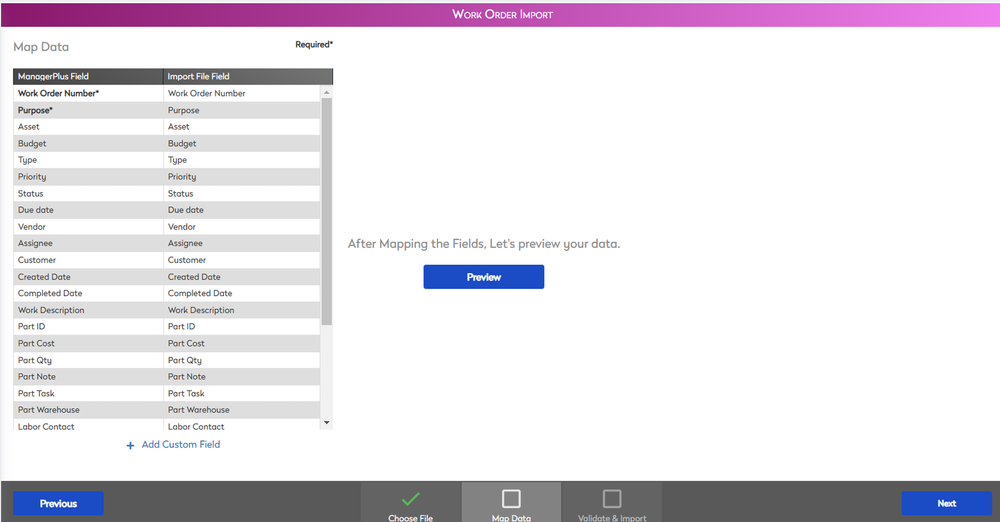
If you find a discrepancy, then you can correct the mapping.
- Click the Preview button. The Review Your Data screen displays.
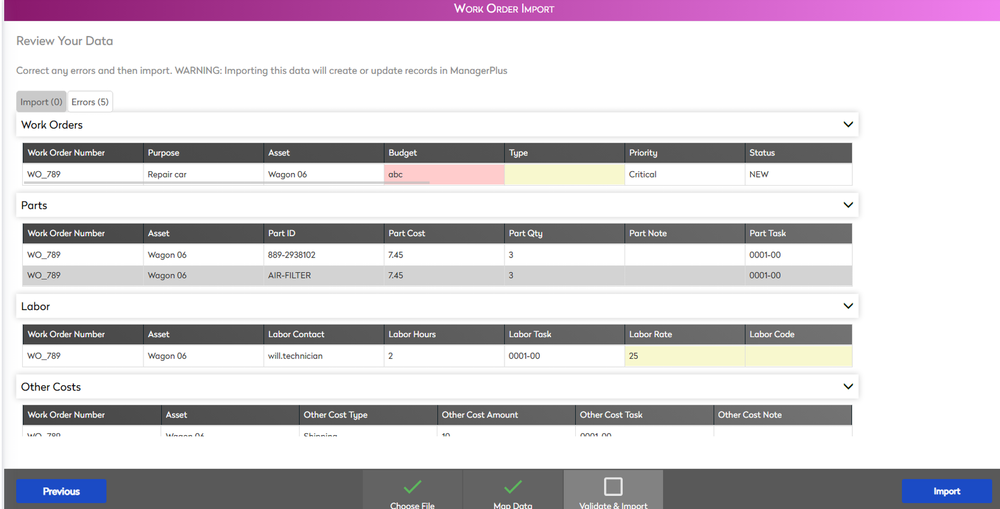
Step 5. Import
- Now you are ready to import. Click on the Import button.
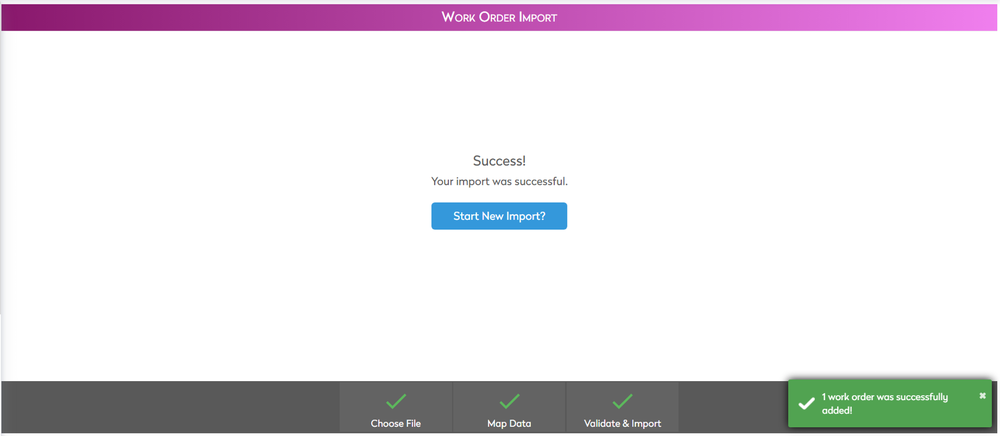
The work orders are imported and available in the work order module.